
Self-worth Experiential Sessions
Experiential sessions are three-hour long experiential workshops that play a crucial role in reducing HIV-related internal stigma. These sessions, mostly offered online, offer participants an immersive introduction to a peer-led approach designed to address the deeply personal and often hidden impact of internal stigma among adolescents and young people living with HIV.
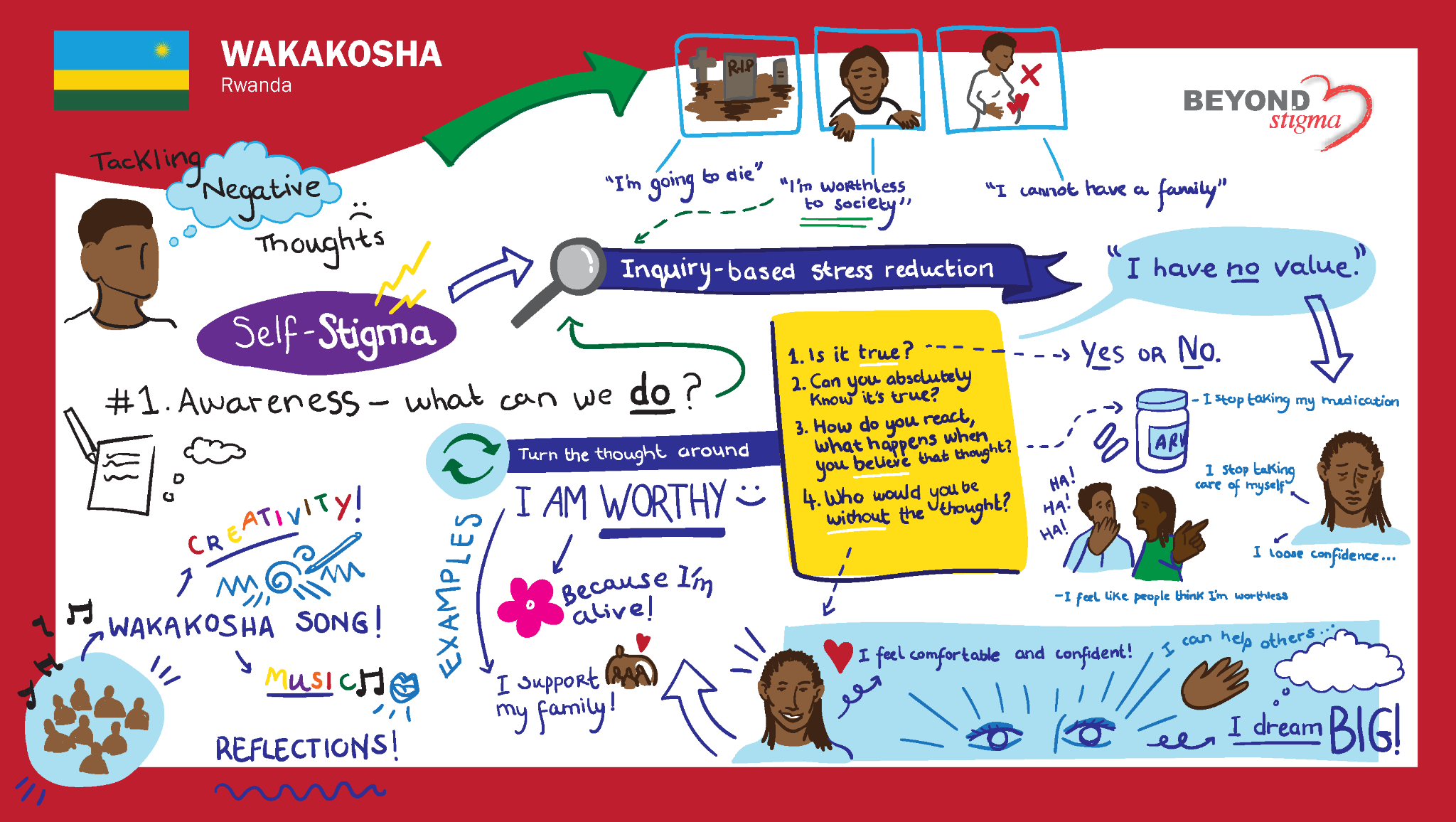
At the heart of these workshops lies a core focus on inner work—beginning with self-reflection and an exploration of personal beliefs. As one participant shared, "Wakakosha is all about the journey from internal stigma to self-worth."
This journey begins by addressing fundamental questions: What do I believe about myself? What do I believe you think about me? These questions form the foundation of our perception of the world and serve as the starting point for transformational change.
Aimed at fostering self-awareness and reducing internal stigma, the objectives of these workshops are threefold:
to increase understanding of internal stigma and its causes and consequences
to provide a first-hand experience of Wakakosha’s practical tools
to facilitate participants’ work on their own internal stigma.
The workshops achieve this through an approach using inquiry-based stress reduction), which works at the level of deeply held beliefs, alongside creative expression such as song. Beyond delivering results in their own right—such as increased awareness and understanding of —these experiential workshops provide a solid foundation for the follow on interventions within the CLSRI model . They equip participants in training with the skills needed to support others effectively, while also laying the groundwork for further efforts to address HIV-related internal stigma. In their content and peer led, youth centred approach these workshops embody Wakakosha’s transformative approach that not only meets their objectives but also creates a real shift in participants’ perceptions of themselves and others in a very short space of time.
Eleven experiential workshops were delivered across Rwanda, Ghana, Zambia, Nigeria, Uganda and South Africa in 2024/25 to 406 women living HIV/key populations/health care workers.
The experiential session evaluations provide feedback and insight into their impact on awareness, understanding, attitudes, and behavioural intentions regarding HIV-related internal stigma. The analysis of responses highlights meaningful shifts across all four areas, supported by illustrative quotes and data trends.
1. Increased Awareness of HIV-Related Internal Stigma
Participants consistently reported increased familiarity with HIV-related internal stigma following the sessions. For example, in Zambia, the proportion of participants who rated themselves as "extremely familiar" or "very familiar" increased significantly, with a corresponding decrease in lower familiarity categories. Similarly, in Rwanda, participants showed a clear shift from being "slightly familiar" to "extremely familiar," reflecting the sessions' effectiveness in enhancing awareness.
2. Increased Understanding of HIV-Related Internal Stigma
The data reveals significant growth in participants' understanding of the impact of HIV-related internal stigma. Feedback indicates a marked improvement in ratings, with many participants progressing from "average" or "good" understanding before the session to "excellent" after. In Ghana, the categories of "poor" and "very poor" understanding disappeared entirely post-session, and in Zambia, no participant rated their understanding as "poor" or "very poor" after the session, reflecting a clear enhancement of knowledge.
3. Changes in Attitudes Toward Internal Stigma
Results indicate a clear shift in attitude, with participants expressing an increased confidence in discussing HIV-related internal stigma following the sessions. In Ghana, participants reported feeling more confident. Similarly, the majority of participants expressed increased confidence in addressing the topic.
“It has built my capacity—I wouldn’t separate myself from society now because of my status” (Zambia).
“I feel more confident in sharing my items with family members” (Ghana).”
4. Impact on Behavioural Intentions
The sessions had a significant impact on participants' intentions to seek further training or take action to address internal stigma, including reaching out to others. In Zambia, all participants (100%) reported being "likely" or "very likely" to pursue additional training. Similarly, in Rwanda, the majority of respondents expressed strong intentions to take action in addressing internal stigma.
“I need to give information about internal stigma to adolescents out there living with HIV” (Zambia).
“The sessions encouraged me to open up about my HIV status” (Rwanda)
Conclusion
The experiential sessions were successful in increasing awareness and understanding of HIV-related internal stigma, changing attitudes, and influencing behavioural intentions. Participants valued the interactive and supportive nature of the sessions, with many requesting expanded programmes and more frequent workshops.
Feedback such as “This workshop needs to be experienced globally; it will save lives” underscores the impact that these short sessions can and do have on individuals. Recommendations for future improvements include in-person as well as online delivery, extended duration (or multiple sessions), and expanded content to amplify the sessions' positive outcomes.